
Storytelling & Media Source Expertise
We operate on both sides of the media equation — as experienced storytellers and as trusted contributors to the stories others tell.
Our team has a proven track record of producing high-quality, publication-ready journalism, from hard news to long-form features and historical storytelling. Whether it’s capturing the drama of live sport or uncovering deeper narratives, we understand how to shape compelling angles, build strong intros, and deliver clean, accurate copy that stands up in leading outlets. This includes published work across major platforms and specialist media, as well as original reporting such as our Rolex Sydney Hobart coverage and national football features .
Equally, we are a reliable, media-savvy source for journalists. With deep networks, subject-matter expertise and an instinct for what makes a story, we provide clear, quotable insights that add authority and context. We understand newsroom pressures — tight deadlines, the need for accuracy, and the importance of strong grabs — and respond accordingly.
What sets us apart:
- Ability to both create and contribute to media narratives
- Strong editorial judgement and news sense
- Clear, concise, and quotable commentary for journalists
- Deep expertise across sport, events and human-interest storytelling
- Trusted relationships with media outlets and reporters
Whether you need a story written — or a story strengthened — we help ensure it lands with impact.
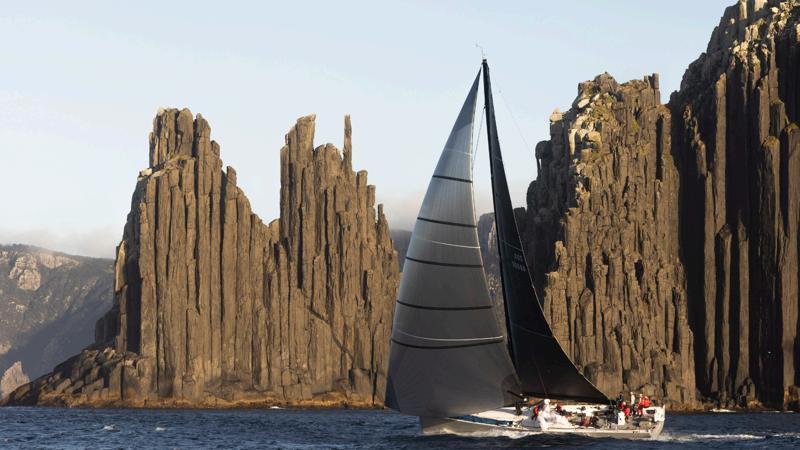
FROM BRUTAL BASS STRAIT TO CHAMPAGNE SAILING: NO LIMIT SKIPPER SAVOURS A HARD-EARNED FINISH
Skipper David Gotze finally pulled his boat into Hobart with a smile that mixed relief, fatigue and a hint of humour after No Limit's long passage south.
Time & Date: 29/12/2025 - 1615 (75.2 hoursafter the start)
"Finally — too long," Gotze laughed when asked about the race, before quickly conceding it had delivered just about everything offshore sailing can throw at a crew.
A speedy No Limit - ROLEX/Andrea Francolini pic.
The opening stages were the hardest to stomach. The first 36 hours, particularly through Bass Strait, were, in his words, "truly horrendous" — a relentless stretch of confused seas and constant slamming that left the crew battered and searching for rhythm.
"They weren't quite our conditions," Gotze said. "It was tough going the whole way."
Relief came once the fleet reached the east coast, where conditions transformed into what sailors dream about. With the sea state settling and the boat stretching its legs, No Limit enjoyed what Gotze described as "terrific champagne sailing" — the kind of glamorous run that almost makes crews forget the pain that comes before it.
But the race wasn't done yet. On reaching Storm Bay, the breeze vanished. Progress slowed to a crawl as the boat traced lazy circles on the water.
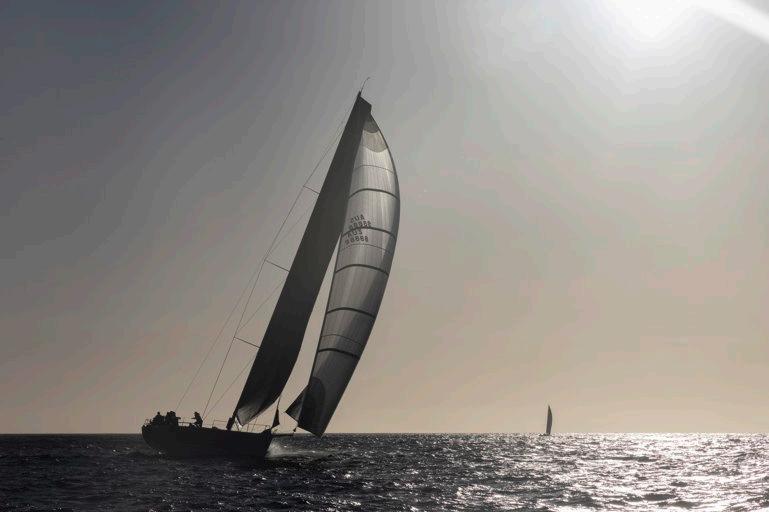
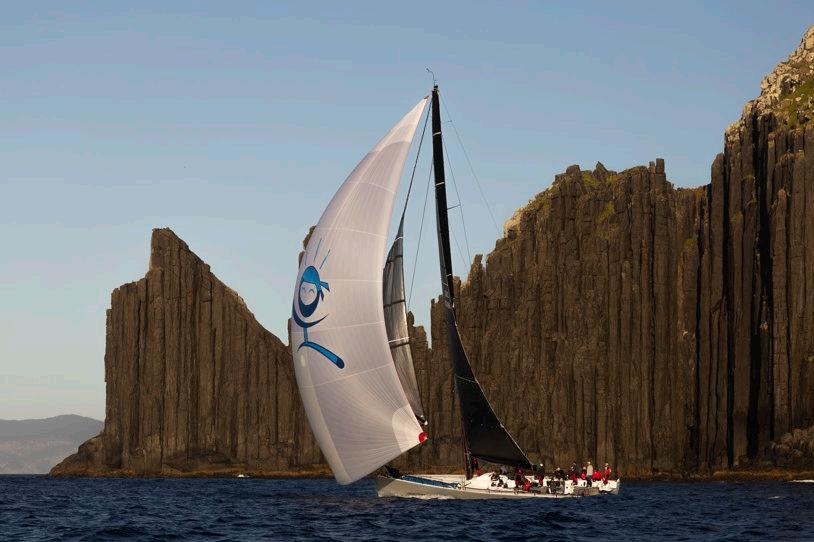
The iconic Organ Pipes - ROLEX/Andrea Francolini pic.
"It stopped," Gotze said. "We did a few circles — we could have done some fishing."
Despite the drawn-out finish, the boat itself came through unscathed. "The boat went well, no damage," he said, noting only the Rolex flag had suffered along the way.
With the hardest miles behind him, Gotze admitted there was only one thing on his mind before committing to another offshore epic.
"A beer first before I tackle another one," he said. And a return? That depended on how many were poured. "Give me a beer and I'll think about it," Gotze laughed. "After two beers, I'll definitely do another one."
Steve Dettre/RSHYR media
Australian soccer mourns death of revolutionary coach Rale Rasic
Australian soccer pioneer Rale Rasic, the first coach to take the Socceroos [https://www.afr.com/topic/socceroos-hpx] to a World Cup, has died, aged 87.
Always hailed as a revolutionary in the game in Australia, Rasic, when appointed Socceroos boss in 1969, [https://www.afr.com/companies/sport/power-money-ego-and-the-aleagues-first-tumultuous-decade-20150921-gjr708| demanded that the system where state selectors picked the team be ended to give him total control of team selection.
Born in Mostar, Yugoslavia on December 26, 1935, Zvonimir "Rale" Rasic arrived in Victoria in 1962 as a journeyman player disillusioned with European soccer, to play for Footseray JUST.
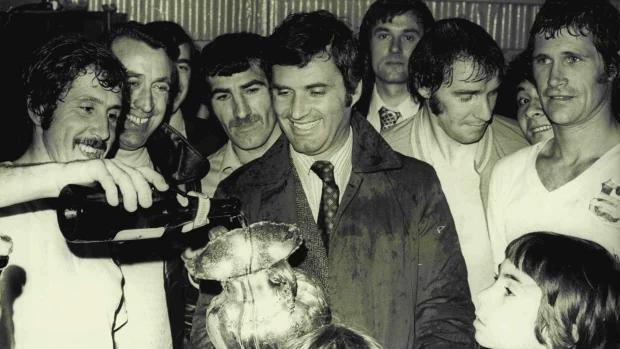
Coach Rale Rasic (centre) shares in the spoils with Fairfield Marconi Soccer skipper Ray Richards (left) in 1973. Fairfax
As Joe Gorman wrote in his 2017 book The Life and Death of Australian Soccer: "His mind for tactics and organisation was far more advanced than his playing ability. His ascent from JUST to the Socceroos via Melbourne Hungaria and St George-Budapest was meteoric. At each club he demanded the highest standards of professionalism from players, staff, and committee."
The 1973 campaign for the World Cup overcame some tough regional opponents in Iraq, Indonesia and New Zealand, before a magical 3-0 win against Iran in Sydney. Then, in front of a reputed 128,000 in Tehran, the Socceroos battled hard to only succumb 2-0 and move to the final phase.
Rasic often spoke of the fighting spirit of his "boys" in those final matches, including a 0-0 draw with South Korea in Sydney, and then 2-2 in Seoul, before the play-off in Hong Kong was settled by the rocket shot from Jimmy Mackay.
Rale Rasic at the MCG in 2005. He coached a long list of teams in Australian football, always winning trophies and spreading his football philosophy around the country. Wayne Taylor
At the recent funeral of his 1974 defender Manfred Schaefer, Rasic regaled those at the wake with stories of the "mental toughness of the team, ability to focus on what was needed, what we wanted to do".
In 1971, he led his club team, St George-Budapest, on the first overseas tour by an Australian club team, winning a tournament in Japan. It was there that his managerial prowess was observed first-hand by journalist Andrew Dettre.
"His attention to detail, his ability to keep control of a myriad of issues, was breathtaking. Whether it was organising transport for the team to training,
planning the daily routine, ensuring kit was ready, or plotting the tactics for the matches .. Rasic was in total control," Dettre wrote in his memoirs.
He was a master of psychology in getting the most out of his players and teams.
Again from Gorman's book: "In the final game of St George-Budapest's tour of Asia in 1971, Attila Abonyi and Adrian Alston insisted that Rasic start them in the forward line, bargaining that if they both failed to score in the first half, he could substitute them for the second. Rasic agreed. Abonyi and Alston fulfilled their end of the deal, both netting a goal in a stunning 3-0 first half performance. Never one to take instructions - especially from his own players - Rasic substituted them anyway."
Rasic coached a long list of teams in Australian football, from St George to Marconi, Adelaide City, Pan Hellenic among others, always winning trophies and spreading his football philosophy around the country.
He also had a hand in the foundations for the Australian Institute of Sport, taking part in the feasibility study group that created the AIS.
Always an absorbing after-dinner speaker, he was famous for turning his allotted 20 minutes into a 40-minute speech, but always kept the audience engaged and entertained.
Rasic was inducted into the Sport Australia Hall of Fame in 1989, and in 2001, he was awarded the Australian Sports Medal and the Centenary Medal for "services to soccer" and in 2004 the Medal of the Order of Australia for "service to soccer as a player, coach and administrator".
In 1999, he was inducted into the Football Australia Hall of Fame.
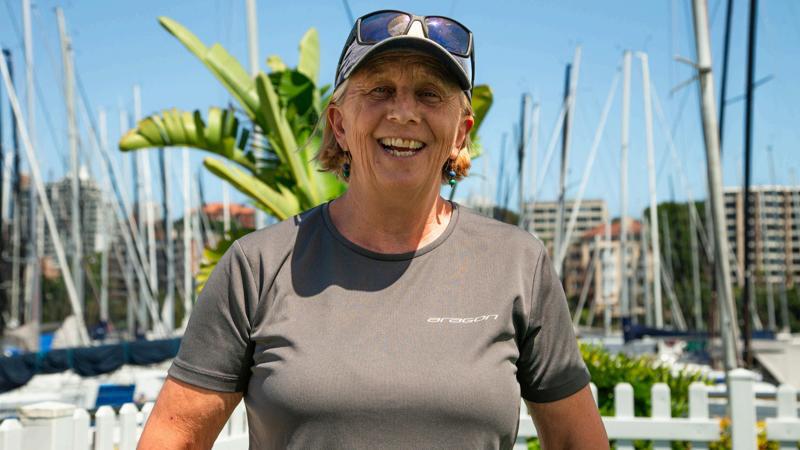
FROM SEXTANTS TO STARLINK: HOW OCEAN RACE NAVIGATION HAS BEEN TRANSFORMED
When Adrienne Cahalan first sailed the Rolex Sydney Hobart Yacht Race back in 1984, navigation meant paper charts, dividers and a constant watch on the sky.
"There was no GPS," Cahalan recalls of the Cruising Yacht Club of Australia's annual race. "I watched another navigator taking sextant sights. You really gain an appreciation for how people had to do it before digital navigation."
Weather information came via high-frequency radio broadcasts, supplemented by experience and observation. Cloud formations were read as carefully as charts, offering clues about approaching fronts or settled high-pressure systems. Position-finding was labour-intensive, involving parallel rulers, compasses, tables and manual plotting.
That world began to change in the early 1990s with the arrival of GPS.
Adrienne Cahalan speaking at the BOM's Long Range Weather Forecast - Ashley Dart/CYCA pic.
"GPS shifted the navigator's role," Cahalan said. "Suddenly, you knew exactly where you were. That freed up time to focus more on tactics, boat performance and strategy."
While location accuracy improved dramatically, weather information remained limited. Voice forecasts continued via radio, later joined by weather faxes that delivered synoptic charts on rolls of paper. The navigator still acted as the sole conduit of information on board.
The next major shift came in the early 2000s with the introduction of internet connectivity at sea, although access was heavily restricted.
"It was extremely expensive — something like $20 a megabyte," Cahalan said. "You had to disable images and be very selective about what you downloaded."
True real-time access did not arrive until the last few years, with the rollout of satellite broadband systems such as Starlink. For the first time, offshore crews could access the same tools available on land: live satellite imagery, radar, coastal observations and constantly updated weather models.
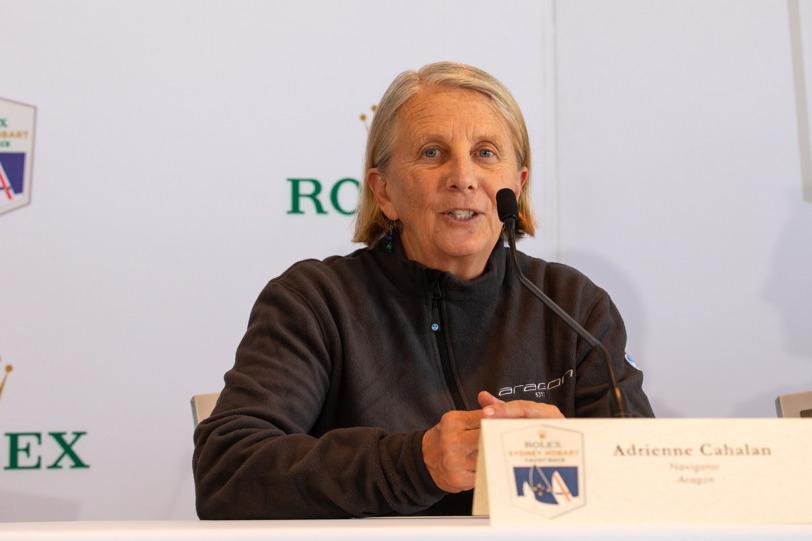
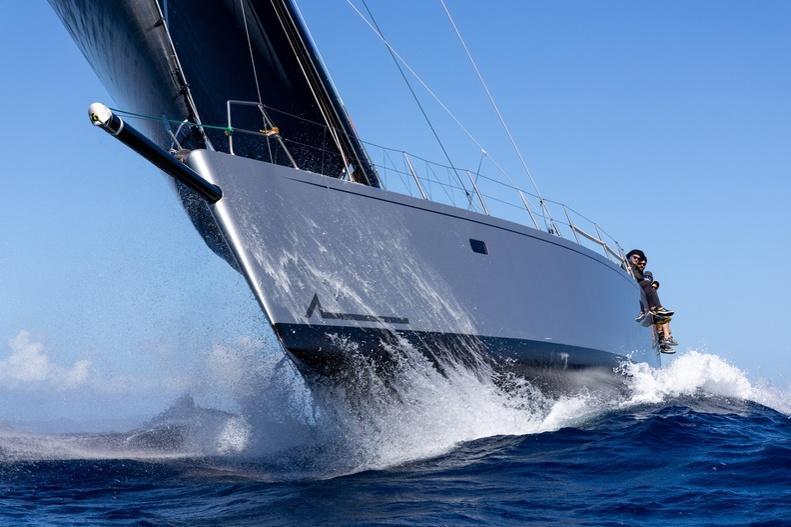
Cahalan is competing in the 2025 Sydney Hobart on board Aragon - Tim Wright/RORC pic.
"You can sit out there now with so many tools at your fingertips," Cahalan said. "But they're a guide, not a decision-maker."
Despite the explosion of data, she argues experience and intuition remain central to navigation.
"I've seen these scenarios before. You watch them unfold and remember what happened last time," she said. "That's something technology can't replace."
The rise of digital tools has also changed expectations. With weather apps and online models now available to anyone, navigators face greater scrutiny.
"The expectations on navigators have gone up," Cahalan said. "People assume you should know everything, but we don't have a crystal ball."
At the same time, the wider access to information has made crews more informed and engaged, reducing reliance on a single source of knowledge on board.
Some older tools have disappeared almost entirely. Sextants, once essential, are now museum pieces.
Some of the navigators in this year's Sydney Hobart (from left to right): Adrienne Cahalan, Alice Tarnawski, Chris Wild, Clare Costanzo and David Turton - Ashley Dart/CYCA pic.
Some of the navigators in this year's Sydney Hobart (from left to right): Adrienne Cahalan, Alice Tarnawski, Chris Wild, Clare Costanzo and David Turton - Ashley Dart/CYCA pic.
"I haven't had a sextant on a boat for 20 years," Cahalan said. "I didn't carry one on my last round-the-world race either."
Paper charts, while no longer strictly necessary, still have a place.
"They're useful as a visual reference," she said. "People often grasp things more easily looking at a chart than at a screen."
Modern navigation systems now resemble high-performance motorsport garages. Boats are equipped with sensors measuring speed, angle, pressure and sail shape, feeding sophisticated performance software that compares real-time data with forecast models.
"You've got sensors everywhere telling you what the boat is doing," Cahalan said. "It's incredibly computerised "
That volume of information can be overwhelming. Knowing what to ignore has become as important as knowing what to analyse.
"You have to focus on what really matters and not chase every rabbit down a hole," she said.
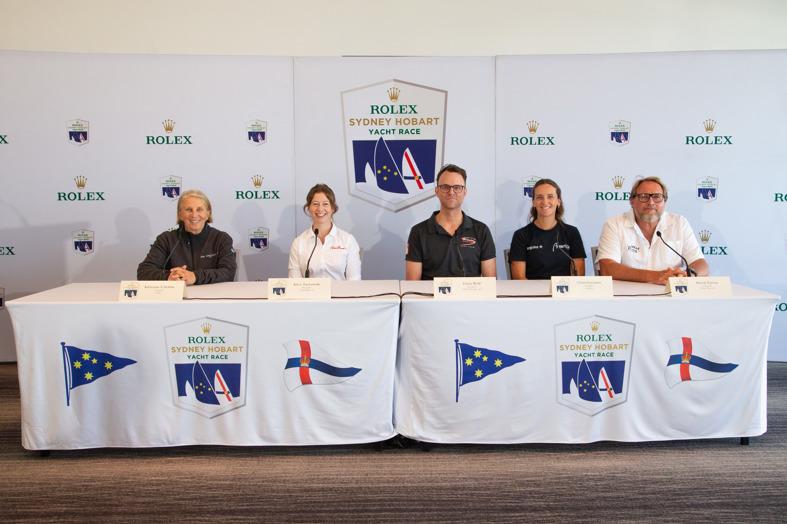
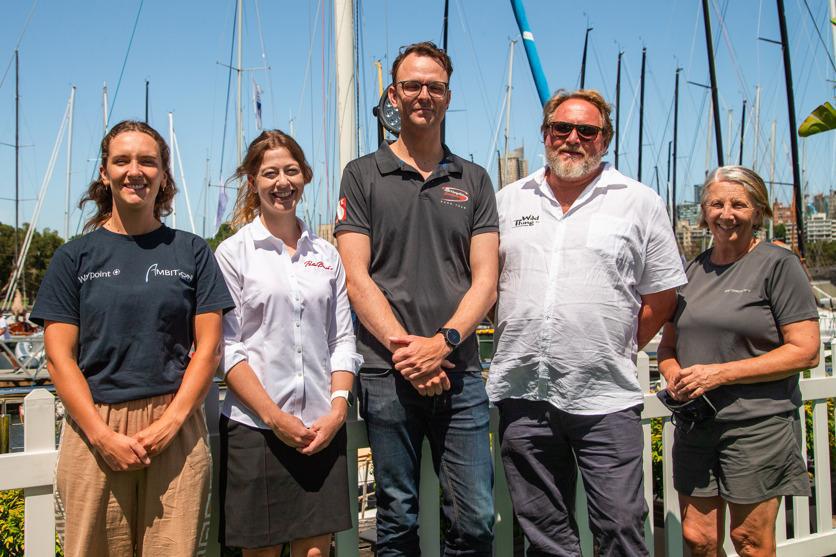
From left to right: Clare Costanzo, Alice Tarnawski, Chris Wild, David Turton and Adrienne Cahalan - Ashley Dart/CYCA pic.
Through four decades of technological change, one element has remained constant.
"Communication hasn't changed in 40 years," Cahalan said. "The navigator still has to clearly explain the plan — what we're trying to achieve and how we want to sail the boat. Computers can't do that."
As offshore racing continues to evolve, navigation has become faster, more precise and more data-rich than ever before — but at its core, the job still relies on judgement, experience and the ability to read both the ocean and the people on board.
Steve Dettre/RSHYR media
BAREFOOT RELIEF AND BIG GAINS FOR SMALL BOATS
Barefoot on the dock at Hobart, toes finally free, Rhys Cantwell looked like a sailor who had just exhaled after holding his breath for four days of the 2025 Rolex Sydney Hobart Yacht Race.
Time & Date: 30/12/2025 - 1630 (99.5 hours after the start)
A crewman on Kraken Sails Toecutter, Cantwell had only just peeled off his sea boots. "I've had boots on for four days," he laughed. "I just took them off." The relief was earned. The race had been demanding, but for Cantwell and his crew it also delivered a quiet revelation about their boat.
The big talking point was what lay beneath the waterline. Freshly fitted twin rudders transformed the Victorian Toecutter's behaviour when it mattered most.
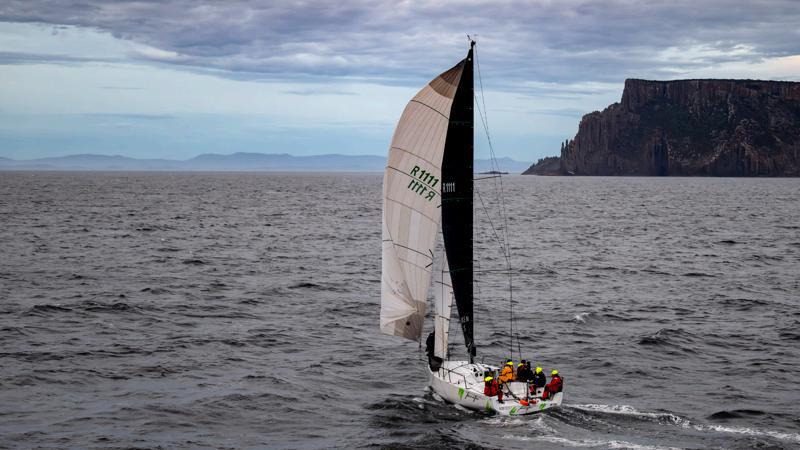
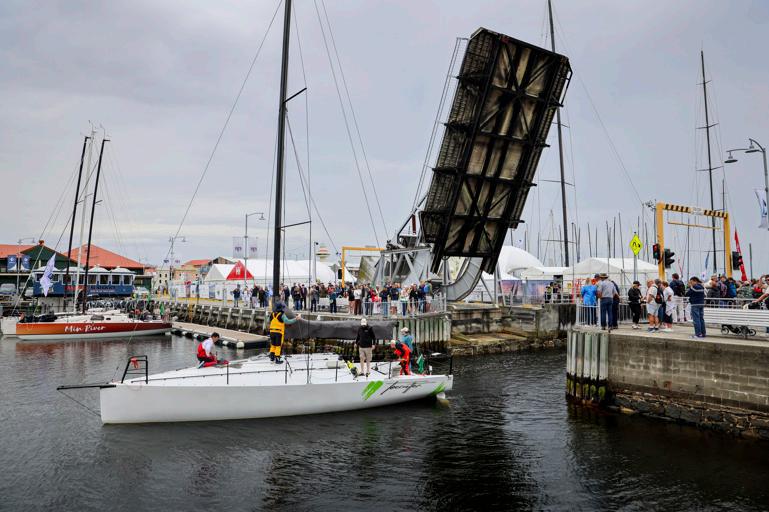
"It's made it a totally different boat," Cantwell said. "Hard running and reaching — it just hangs on now. It doesn't let go."
In the heavier conditions, the change felt dramatic. "It was like taking the handbrake off," he said, describing long days and nights of fast, committed sailing where the boat felt quicker, more manoeuvrable and far more forgiving. The gamble on modifications paid off, and the sense of satisfaction was obvious.
Kraken Sails Toecutter owner Robert Hick - Christie Hamilton pic.
There is more to come too, with further upgrades planned as the team turns its attention to the offshore circuit and the next tilt at the Rolex Sydney Hobart.
Elsewhere along the dock, the mood was similarly reflective after this, the 80th edition of the Cruising Yacht Club of Australia's famous 628 nautical mile race.
Borderline co-skipper lan Hoddle (sailed double handed by Hoddle and the boat's owner Andy Offord) summed up the physical toll simply: "Pulled up okay — just a few stresses and strains on the body. Nothing serious."
And for Min River's Alexis Loison, the verdict was clear-cut after a race defined by constant change.
"A very hard race, from the start to the finish," he said. "A lot of weather changing — but a fun, attractive race and a really good result at the end."
Steve Dettre/RSHYR media
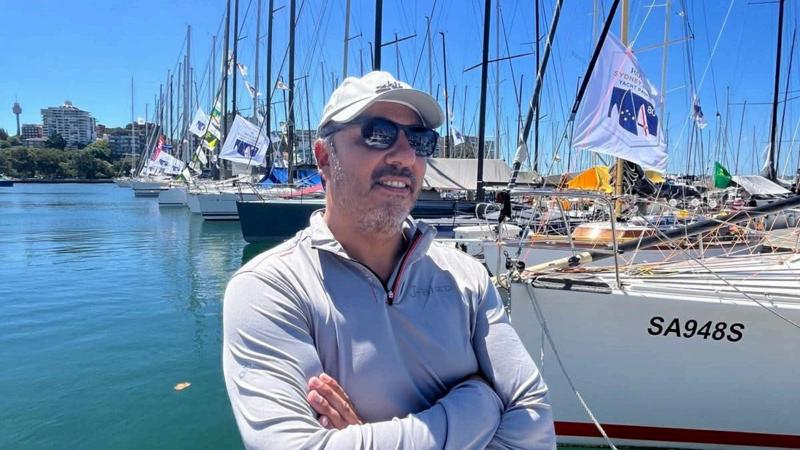
NEW CHILEAN SAILING PRESIDENT CHASES LIFELONG DREAM — AND A PACIFIC FUTURE
Yerko Cattarinich's first Rolex Sydney Hobart Yacht Race is more than a personal milestone. For the newly elected president of the Chilean Sailing Federation, it is a statement of intent about where he wants to take the sport - and his country.
"It is the dream of my life," Cattarinich said after securing a late berth in the iconic 628 nautical mile offshore race. But the dream nearly ended before it began, when plans to sail on his original boat collapsed just days before the start.
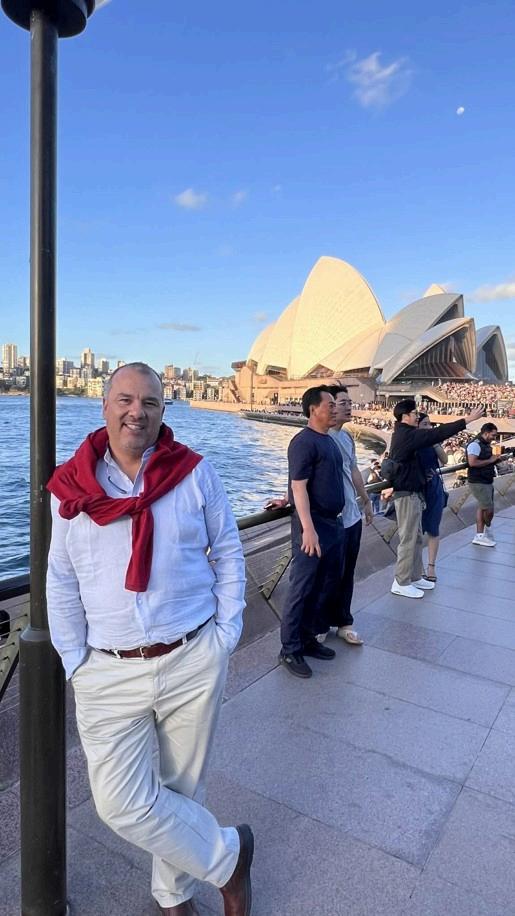
Cattarinich enjoying the Sydney sights - Cattarinich pic.
Disappointed and unsure if he would race at all, Cattarinich instead found an unexpected lifeline. Hearing his story, the owners of Ocean Crusaders J-Bird invited him aboard, giving the Chilean sailor a second chance at the event he has followed for decades.
"I was very sad at first," he said. "But I came here for two reasons — for my personal dream, and for my responsibility as president."
Only weeks earlier, Cattarinich had been elected to lead Fedevela for the next three years. A former Chilean Navy officer, certified high-seas captain and owner of the 42-foot yacht Altair, he brings both military discipline and lifelong sailing experience to the role. His résumé includes service as Maritime Governor of Aysén, Commodore of the National Naval Command, and leadership roles in elite naval sailing programs.
Now racing in Australia, Cattarinich sees the 80th Sydney Hobart Yacht Race not just as a test of endurance, but as a bridge across the Pacific.
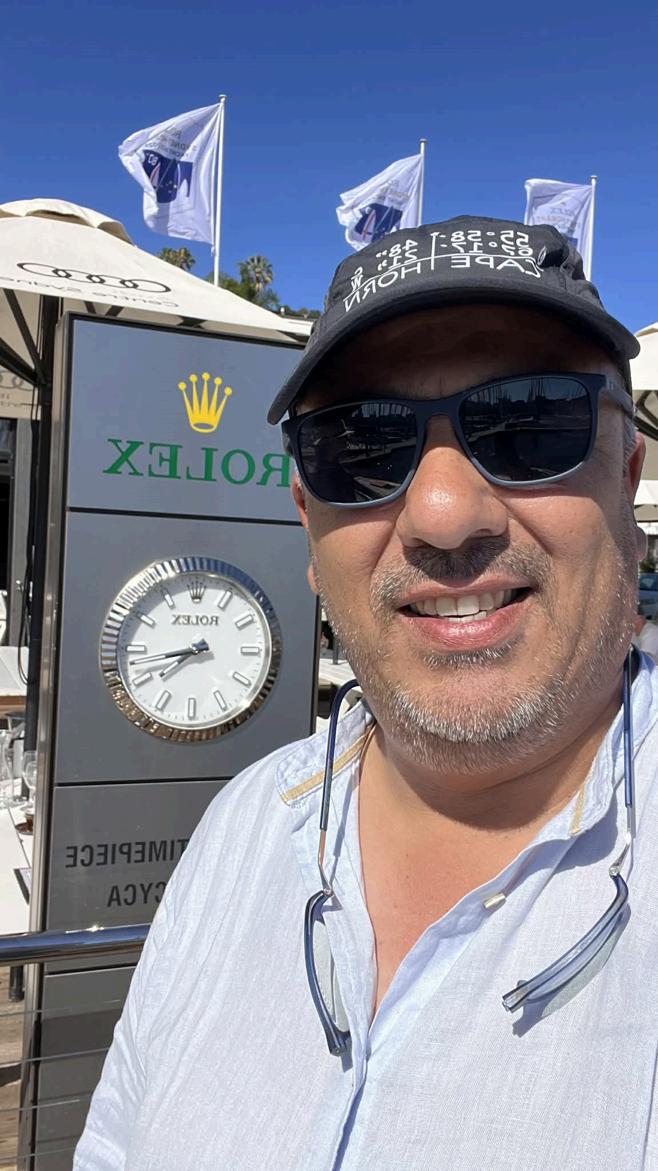
Cattarinich at the CYCA - Cattarinich pic.It doesn't let go."
"My idea is to connect Chile with Australia and New Zealand," he said. "The Pacific is not a border - it's a connection," he said at the Cruising Yacht Club of Australia marina.
During his time in Sydney, Cattarinich has met local sailing officials and yacht club leaders to explore exchange programs that would allow young Chilean sailors to train and compete in Oceania. He believes exposure to Australia's offshore culture could fast-track technical development back home.
Chile's coastline — more than 6,000 kilometres long — should make sailing a national passion, he argues. Instead, participation remains limited.
"This is something I want to change," he said. "Chile is a country of the sea. We import and export through the ocean, but sailing is still not for everyone."
As president, he wants to expand grassroots programs, particularly junior sailing and technical education, while also rebuilding Chile's offshore racing calendar. One long-distance race of 1,000 nautical miles was abandoned years ago due to extreme weather and safety concerns.
Cattarinich believes lessons from Australia could help bring it back — safely.
"I want to create a race similar in spirit to the Sydney Hobart, but adapted to Chile," he said, describing a possible course from Valparaíso to Puerto Montt, through fjords and channels comparable to Tasmania's rugged waters. Crucially, any such race would involve close coordination with the Chilean Navy for search-and-rescue support.
On board Ocean Crusaders J-Bird, owned by lan and Annika Thomson, Cattarinich is the final crew member — number 15. His role is flexible, helping wherever needed, but his broader mission is fixed.
"To enjoy it, yes," he said of his Hobart ambition. "But also to learn. To take this experience back to Chile.
"This country shows what is possible — quality of life, strong sport, strong community," he said. "If we can mirror even part of this in sailing, Chile will be better for it."
For Cattarinich, it is not just a race to Hobart — it is the starting line of a longer journey for Chilean sailing across the Pacific.
Steve Dettre/RSHYR media
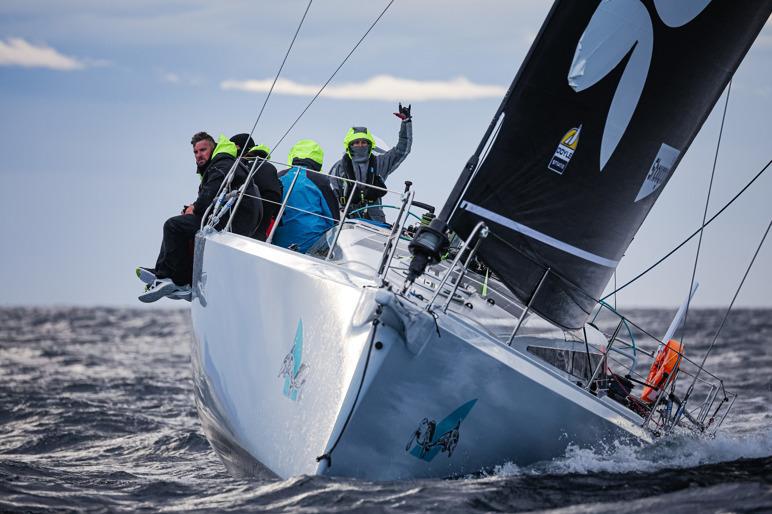
Ocean Crusaders J-Bird nearing the finish of the 2024 Sydney Hobart - CYCA/Salty Dingo pic.